Honey

Honey

Sailing around New Zealand

Emily is sailing solo around New Zealand on her 32 foot yacht Honey, from Lyttelton south down the east coast, around the bottom of Stewart Island, up the west coast of the South and North Islands and down the east coast back to Lyttelton. The whole adventure is expected to take 3 months. This blog will provide updates as I travel (when I have mobile reception to upload).


Monday, 8 April 2013

The Final Leg – Port Underwood to Lyttelton (21-22 March)

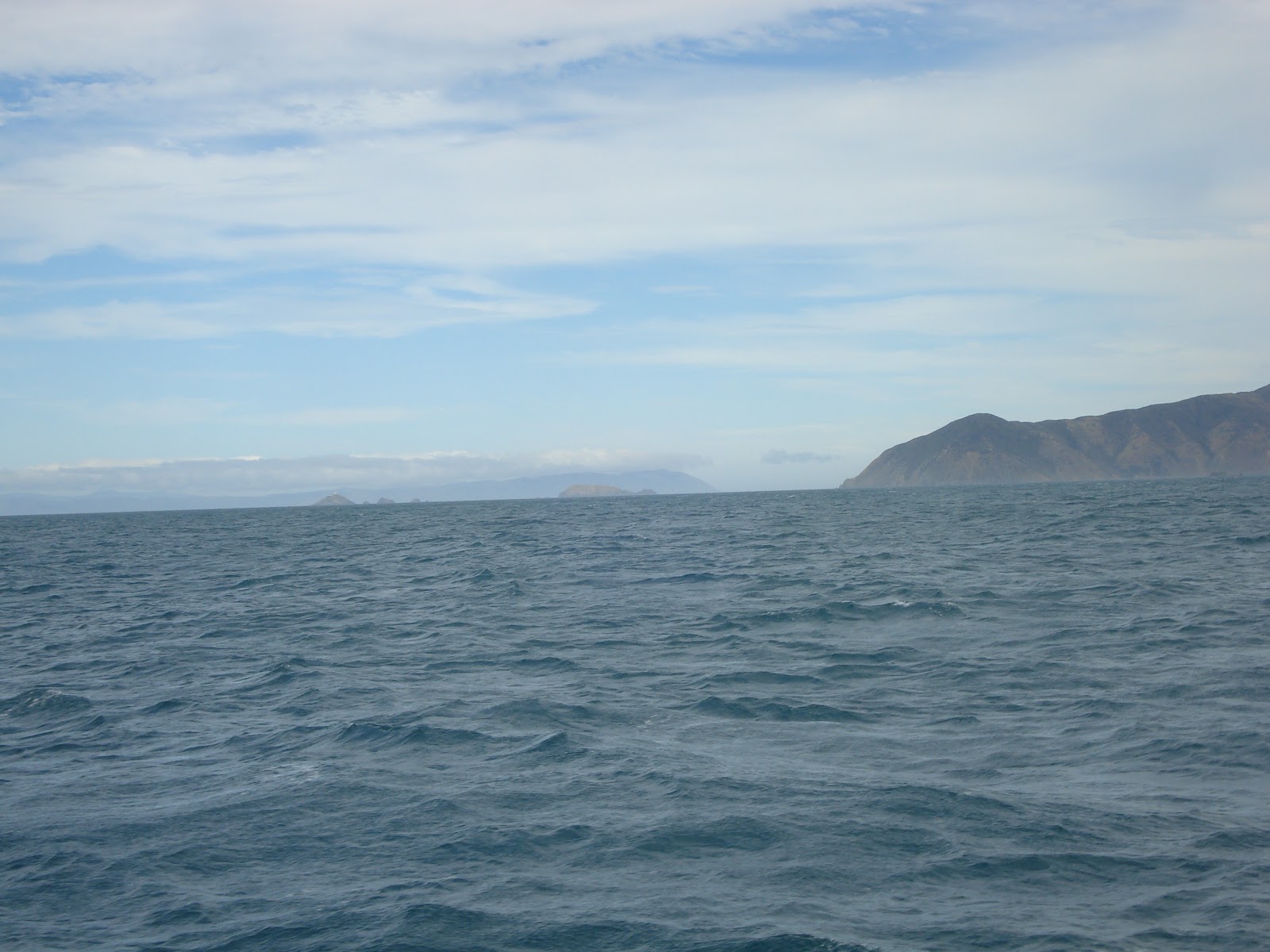
My plan was to head back to Lyttelton by Easter and the best opportunity appeared to be to catch the north east that was forecast to pick up this afternoon (Thursday). I was unsure about when to leave – Thursday afternoon with a forecast of NE 15 knots, or Friday morning when the winds were predicted to increase to 20-25 knots. I opted for leaving on Thursday afternoon – this should give me a nice sail down the coast with minimal swell and have me into Lyttelton Harbour before the rough seas kicked in. It also meant that I would likely be passing Kaikoura in the early morning, with the potential for seeing some whales. My plan was to arrive into Lyttelton at around midnight on Friday and stay the night on the club mooring in Little Port Cooper so I could arrive into the harbour in the daylight, hopefully with timing to coincide with the departure of the flotilla bound for Pigeon Bay. Having spent the morning resting up and getting ready to leave (I wasn't expecting much rest on this leg as it is a reasonably busy shipping route), I motored out of Oyster Bay at 2pm and headed out of Port Underwood, taking a peak into the eastern side of the port on the way. This was my first time into Port Underwood, and I had not really seen it arriving at dusk the night before. Port Underwood is very similar to the Marlborough Sounds, only it has a more “scraggy” appearance – it is almost completely covered in pine plantations with the naked areas that come with harvesting, there are many lines of mussel buoys and a number of pylons circle the harbour, presumably feeding power to the HVDC link. There look to be a number of small communities, most of which appear to be made up of fishermen and mussel harvesters.

Oyster Bay, Port Underwood
Outside Port Underwood with a light easterly blowing, I raised the main and unfurled the headsail and sailed towards Cape Campbell at about 4 knots. As I neared Cape Campbell, I furled up the headsail and turned into the wind to be sure I gave the nasty rocks around the cape a good clear berth. I got a message from Mum that her and Kai had been down to the end of the road in the Awatere Valley and had managed to spot me using field glasses! Rounding Cape Campbell, with the headsail unfurled and the light easterly still blowing, I moved along at 3.5 – 4.5 knots for a few miles until the sun set and the wind eased and I was barely making 2.5 knots. I started the motor and motor sailed, waiting for the forecast north easterly to kick in. A couple of times it looked like it was starting and I'd drop the revs back on the motor, only to find I was doing no more than 2.5 knots. By about 11pm, a light land breeze picked up instead, although again this sent me along at no more than 2.5 knots. So I resigned myself to motor sailing, and I carried on motor sailing for the rest of the night. A large ship passed me one mile to seaward heading north at about 4.30am – I figured this was the ship I had seen on the Lyttelton Port departures which left at 8.40pm, one that I made a mental note to look out for. Car and truck lights were clearly visible running up and down the Kaikoura coast through the night, at odd times there were a reasonably large number presumably linking with the ferry departures from Picton. Motor sailing meant I made very good timing, the small amount of wind meaning Honey was moving along at about 6 knots, which had us at Kaikoura by 6am while it was still dark – too early to be able to spot any whales. I slowed Honey down to an idle and we slowly motored down the coast at about 4 miles out to sea where the continental shelf rises from more than 1000 metres to about 100-200 metres, and where I hoped to spot a whale. It was glassy calm as the sun rose, with the first rays glinting on the snow on the Kaikoura mountains – very beautiful, but no whales. At 7.20am having given up my hopes of whale spotting, I carried on motoring down the coast hoping the wind would pick up sometime soon. I'd had no rest to speak of that night – its not so easy to take naps when the engine is continually whirring, and I'm also not able to hear my alarm or the sound of an approaching boat.
Sunrise over the Kaikoura Range
I was off the coast from Point Gibson, roughly where the Hurunui River meets the sea, when the north east wind finally picked up, and at 12.30pm I unfurled the headsail and turned off the engine. So good to finally have some peace, and moving along at 4 knots, I retreated into the cabin for a short nap. Twenty minutes later and now sailing along at 5 knots and with no other boats in view, I took another short nap. The wind continued to pick up and soon I was doing 6 knots and then 7 knots across Pegasus Bay, with the winds finally reaching about 20 knots. I reefed down, so that the little autohelm could easily handle the small swell that had developed, and settled in to a nice afternoon of sailing at about 6 knots. It was warm and sunny with not a cloud in the sky and no other boats visible at all in the bay, the only sound apart from the wind and the waves were planes passing high overhead. Haze covered most of Banks Peninsula and the sun was setting as Christchurch came into view – the twinkling lights of Sumner and the Port Hills and the sillouettes of the few tall buildings left in central Christchurch. It was an absolutely beautiful evening, and the approach to Lyttelton from Pegasus Bay was so lovely – I felt a huge sense of accomplishment as I passed back into waters I know well. As I approached Godley Head, the wind reduced and I shook out the reef in the main and sailed between two large ships moored off Sumner Beach. Little Port Cooper is just inside Lyttelton Harbour, and I was already at Adderley Head when I quickly furled in the headsail and dropped the main and motored to pick up the mooring. It was after 10.30pm and I would have struggled to locate the mooring in the dark if it wasn't for the GPS coordinates in the club handbook. Securely moored, with a view of the lights of Lyttelton Port, I settled in for a light dinner and a good night sleep before I would sail the final few miles down the harbour in the morning.

Pegasus Bay and my daily view of the blue seas

Around to Port Underwood (20 March)

Tim had an early start and was on the road back to Lyttelton soon after 6.30am. I planned to head around to Port Underwood, south of Queen Charlotte Sound - my plan was to catch the start of the out-going tide through Tory Channel which meant I didn't need to leave Waikawa before about 1pm. So back to sleep for me for a couple of hours. It was a lovely sunny day and still a bit breezy, perfect for drying out everything that had got damp over the last couple of days. Then with Honey readied to go, I left Waikawa at 1.45pm. It was a relatively quick trip out to the heads, motor sailing in the still gusty conditions to Dieffenbach Point at the start of Tory Channel and through Tory Channel where the wind was a bit more steady and a bit lighter, dodging a couple of ferries along the way. It was a beautiful trip, seeing the sunlight cast shadows in the creases of Arapawa Island slide by. I had hoped that leaving a little after 1pm would mean I had some assistance from the current through Tory Channel, but it seemed I was a bit early and Honey barely went faster than her usual motoring cruising speed of 5 knots. There was a light south easterly breeze of about 10-15 knots in the strait, and I raised the mainsail and turned Honey towards the south in the direction of Port Underwood. It was a nice sail, a tight reach and Honey was moving along at about 4 knots. But the day was drawing in and I was aiming for Oyster Bay which I had been told had quite a large number of moorings – I would prefer to get there in the light if possible. So I motor sailed at 6 knots, passing Fighting Bay where the Cook Strait HVDC cable leaves the South Island, and rounded into Port Underwood just before 7.30pm with the last light of the day. It was just getting dark when I entered into Oyster Bay and I could just make out the moorings. Dodging them and a couple of barges and several boats moored in the bay, I found a nice sheltered spot and dropped the anchor for the night.
Arapawa Island and Tory Channel


Queen Charlotte Sound, with Sandra and Tim! (16-19 March)

I rang Tim when I woke up in the morning to see if he would make it up to the Sounds for the weekend, and he was already past Kaikoura – fantastic! I better get a move on if I am going to get to Waikawa no later than he does. I had a quick breakfast, pulled up anchor and waved goodbye to Mike (Vicky was still enjoying a sleep in), and headed towards Waikawa. It was flat calm until I passed Luke Rock where a light wind picked up and I unfurled the headsail and motor sailed towards Waikawa. Rounding into Waikawa with a little time to spare, I cut the motor and slowly sailed or drifted into the bay. As Tim arrived into Waikawa he watched Honey slowly approach – he had just rowed out to Treasure by the time I picked up a spare mooring a few metres inshore of Treasure. Sands' ferry arrived soon after and I took Tim's car to meet her, it was wonderful to see her and great that she'd hopped on the ferry for an overnight trip. All three of us headed out to Treasure for a late lunch and a good catch-up. With the afternoon quickly passing, we headed for Double Cove – Tim on Treasure and me and Sands on Honey. There was a little wind and we sailed under the headsail, until it petered out and we rounded up and motored into the east end of Double Cove. Tim was ahead of us and picked up a mooring and stern line in one of his favourite spots and we rafted alongside. It was a lovely evening, with a yummy steak dinner and lots of chat, before we turned in for the night.

Honey and Treasure in Double Cove
A late start the next day – Sands got to sit in bed reading magazines, a luxury she's not used to with two young children at home! We had a late breakfast and before we knew it, it was time to head back to Picton to drop Sands off at the ferry. Sands and I headed off on Honey and I returned less than an hour later, rafting back up next to Treasure. With a light southerly forecast for that night, we decided to stay put in Double Cove for the rest of the day and night.

The southerly was forecast to strengthen to gale force on Monday and we headed back into Waikawa in good time. Tim was in the midst of buying a mooring for Treasure and he wanted to check the state of the mooring before the wind picked up. Finding the top rope partly worn through, he returned to his previous mooring and Brent Cameron, a friend of Tim's from Vinings, found a berth for Honey in the marina. We were in a good spot – the wind howled that night, and it bucketed down with much-needed rain – Honey nestled in the inner marina. It was a wet and windy day on Tuesday, not as wet and windy as the night before but not a good day for sailing. With the weather not suited to hauling out boats in Lyttelton, Tim could stay another day. This ended up being a good opportunity for sorting out the mooring he was buying, and I could catch up on some odds and ends on Honey. We started the day with a brunch of pancakes and bacon on Honey – I had taken the pancake syrup all around the South Island, it needed to be used up! And we finished the day with a much needed walk to stretch the legs.

Wednesday, 27 March 2013

From Kenepuru to Queen Charlotte Sound (14-15 March)

It was soon after midday when Honey and I headed away from Chunda Cove, with all clothes and perishables stowed back on board. A breeze had just started to come up and we sailed under the headsail out of the bay and across to Schnapper Point, where the wind reduced to a very gentle puff and Honey drifted to the start of the Kenepuru Sound. Rounding into Hikapu Reach and the start of the Pelorus Sound, the wind picked up to about 20-25 knots head on, and I started motoring. The wind turbine started whirring – it was obviously generating, although something wasn't quite right – it wasn't feeding any charge into the battery and I couldn't lock it (which I do when the wind gets too strong). Also the revs on the engine weren't steady – they kept dropping and sounding as if the engine would cut out. The engine obviously wasn't getting enough fuel. I turned back into the Kenepuru, where it was calmer and I could reach Tim on the mobile, and we talked through the engine problem. This was the first good run of the engine I had done since we serviced her and there was an air blockage stopping the fuel to the engine. I cracked one of the bleed screws and got rid of the air, and she sounded much better. I motored Honey up and down part of Kenepuru Sound, and happy that her engine was running well, I turned to head back up into Pelorus. And then the revs dropped again. I hadn't got rid of all the air and again turned the lift pump over until only fuel was being pumped through the line. And then finally I headed into Pelorus Sound, motoring through Hikapu Reach. Honey's engine didn't sound fantastic, but she was running ok, I hoped if there was just a little air left that it might clear itself. Rounding Turn Point, I unfurled the headsail and motor sailed almost to Tawero Point where the wind picked up and I cut the motor. When Honey's engine restarted, it still didn't sound right, so I headed for a mooring in Bulwer, one of the outer bays in Pelorus, where I would take a better look in the morning.

In the morning, I changed the wiring on the wind turbine, removing the regulator which we had installed, hoping that would solve the problem. But there was no wind to check if it worked. And then I looked at Honey's engine. I found that there was air leaking through the O-ring between the primary fuel filter and the bulb. A quick discussion with Tim, and he said I really should remove the bulb to deal with the leak, and if necessary replace the fuel filter if that was causing the problem. This would mean bleeding the fuel lines, and I was rather loathe to do this as it had been very difficult to do the other day and I didn't want to be stranded out in Bulwer if I had no success. I drained and removed the fuel bulb, the filter looked fine but there was muck on the O-ring. Replacing the fuel bulb with a new O-ring, it proved to be a quick and easy job to fill the primary filter with fuel using the lift pump (perhaps we'd had so much difficulty previously because of the air leak). With all the air out of the fuel lines, the engine started with no problem and ran well when I motored Honey out of the bay (and I have had no problems with it since). Feeling quite pleased with myself that I had managed to diagnose and solve the problem, I headed out of Bulwer bound for Queen Charlotte Sound at 11am.

The wind picked up and I found that my re-wiring of the wind turbine hadn't worked, something to sort later. When I was out of Bulwer and had turned towards the end of Forsyth Island, I raised the main and unfurled the headsail. The wind was gusty, typical Sounds wind, calm one moment and 20-30 knots the next moment. I had my first round-up as I passed the West Entry Point outside Port Ligar, one of many I had that day – I was over-powered with the amount of sail up. I reefed the main and carried on at a sedate pace of 4 knots, rounding Culdaff Point at the end of Forsyth Island. With Honey's speed dropping to around 3 knots, it was back up to full sail and I carried on passing a few metres from Titi Island, close enough to hear the birds chirping on the island – it was beautiful. The coastal shipping report gave a speed of 15 knots at Stephens Island and 32 knots at Brothers Island in Cook Strait, and with a line of wind approaching beyond Titi, I reefed again. The wind picked up to about 25 knots and it was lovely sailing – nice winds, no swell, and Honey's speed quickly picked up to 6 knots, then to 7 and 8 knots. This was the Marlborough Sounds, what could go wrong? I had to remind myself not to be complacent. I covered the ground in no time past Cape Lambert and onto Cape Jackson. With the wind picking up to 30 knots and another round-up, I thought it best to put a second reef in the main and partly furl in the headsail, particularly as I didn't want any round-ups while I negotiated the gap between Cape Jackson and the old lighthouse, and the tidal currents around the headland. Around Cape Jackson, with a fantastic view of Cook Strait and the North Island, the wind appeared to drop and Honey was back up to full sail. And then a 35 knot gust hit and another good round-up. I chuckled to myself about being complacent as I reefed the main back in and partly furled the headsail. The gusts kept coming, up to 40 knots with willy-walls (with the wind turbine without its 'lock' working, whirring so I thought it was going to fly off). Down to 2 reefs in the main and the headsail fully furled away and I was still rounding-up. When I had replaced some of the sail slides for the main, I had mistakenly looped the third reefing line around one of the sail slides – I wasn't going to be able to get the third reef in easily. But I got it eventually and sailed into the outer Queen Charlotte Sound with 3 reefs in the main, no headsail and at 7 knots. Until I was between Ship Cove and Motuara Island, when my speed quickly dropped to about 2 knots. The wind was coming in gusts – nothing then about 25 knots – back to 2 reefs and partially unfurling the headsail, and as I passed the southern end of Ship Cove it was back to full sail. Sailing in the Sounds sure keeps you on your toes! The wind died as I passed Resolution Bay and I motored a short distance, until it picked up outside Endeavour Inlet, and then died again off Kurakura Point. I pulled the sails down and motored into Cuttle Cove, a lovely little cove in the north eastern corner of Bay of Many Coves. There was another yacht in the bay, tied to the club mooring. I dropped anchor and pulled Honey's stern in, tying it to a tree on the western side of the cove. The couple on the yacht, Mike and Vicky, were impressed and when they saw I was on my own invited me over for a drink and then dinner. They were in Queen Charlotte Sound on their honeymoon, having sailed over from Mana earlier in the week – they were just coming up to their 1 week anniversary and had a number of useful tips on getting married. With a good catch of blue cod on board, they were eager to eat it all so they could catch their quota again the next day – I was only too happy to help – it was a yummy meal, the blue cod crumbed with corn on the cob. Then it was farewells and I went back for a good sleep on Honey after another very good day on the water.
Beautiful Titi Island
View from Cape Jackson across Cook Strait (between gusts)
 

Boat maintenance in the Kenepuru (11-13 March)

It was another warm and sunny day in the Sounds, and we had a nice relaxed start on Treasure, leaving her to head into the Kenepuru and back to Honey early in the afternoon. I was lucky to have Tim there, and we spent a full day on Tuesday working on Honey. We serviced the engine, replacing the oil in both the engine and the gearbox, and replacing the fuel filters. The set up with Honey's engine makes her quite difficult to bleed, but we got the engine fired up and running well while she was tied up on the floater and I gave her a quick turn around the bay to check all was well. We reconnected the head of the autohelm unit and connected the new battery. I had lost the sleeve that went between the wind turbine and the post it sits on when I had removed the turbine a few days previously. With the very low spring tide, I got lucky in finding it on the sea bed and we reinstalled and wired in the wind turbine (being unable to test it as it was hot and sunny with absolutely no wind). Tim jumped into the water and checked out the prop and shaft and was quite comfortable that not too much damage had been done with my mooring-line-around-the-prop incident. Having looked over the engine, he also felt that there was a reasonable chance that the gearbox seal would hold out if I wanted to continue with my circuit around the North Island.

Servicing Honey on the floater
I hadn't given up hope completely that I would complete a sail of the whole of New Zealand before I came back to Lyttelton. If I did continue and sail around the North Island, it would take 6 weeks, if the good weather held up. And if the weather turned, it may be well into May before I arrived back. I had planned to be back in Lyttelton by the end of March/beginning of April. With time running short, and with the days drawing in (the wonderful highs we have been enjoying would likely move further north as winter approaches so I may face more unsettled weather), I made the call that I would return to Lyttelton, spending a couple of weeks around the Marlborough Sounds. This would mean that I arrive back in Lyttelton by the end of March as per my original plan. It has still been an absolutely fantastic trip, one of the most amazing things (if not the most amazing thing) I have done, and I have learnt so much about the sea, handling Honey in all sorts of conditions, seen incredible places, met wonderful people along the way, had a blast, and not to mention being able to share a good part of it with Tim, and also with Dad and Mum. The North Island isn't going anywhere, I can sail around there another day.

After a relaxed morning on Wednesday, Tim headed back to Lyttelton in the afternoon and I got ready to carry on my adventure the following day. I had spoken with my best friend Sandra (Sands), and she was keen to visit me in Queen Charlotte Sound, particularly as I no longer planned to stop into Wellington on my travels – she was looking to arrive on the ferry from Wellington in the middle of the day on Saturday and return the following day. Tim also said he would try to come up for the weekend – this would give him an opportunity to have the weekend on Treasure, meet Sands and catch up with me! I just needed to get myself around to Queen Charlotte by Saturday. The weather forecast was good, not so good on the west coast of the North Island thanks to Tropical Cyclone Sandra, I had obviously made the right decision.

Back to Lyttelton (7-10 March)

Its getting light a lot later in the mornings, and it was 7am before it was light enough for me to shift Honey onto Dad's mooring. It was high tide, the mooring clearly hadn't been used for some time and it was covered in muscles and sea growth – it was rather heavy work and took me longer than planned to get Honey safely on the mooring and all the sea growth removed, so I was still rowing back to the shore when Jill arrived to pick me up. A quick change – I was mucky – and then in to Blenheim, with wind turbine, autohelm and gas bottle to refill. Mum met me and Jill and I was left with Mum's car while she went back to work for the day. It was quite a nice day spent in Blenheim, mostly nosing around the bookshops, (a real change from being by myself on a boat) before we headed down to Christchurch and Lyttelton. As we approached Christchurch, Banks Peninsula was shrouded in cloud – I had imagined that the next time I would see Banks Peninsula would be approaching by sea from the north, so I was quite pleased that it was hidden. I kept a low profile while back in Lyttelton – Dad arranged for the wind turbine to be fixed, Tim gave me a charged battery to replace my house battery, there was not much that could be done with the autohelm but we did find out that changing the orientation of the compass could solve the problem. The trip down also gave us an opportunity to share with family our exciting news – Tim and I are getting married! (We had been keeping this quiet since Tim visited me in Fiordland). Having visited various family members so we could let them know in person, I headed back up to the Sounds with Tim who had managed to take a couple of days off work. We stayed on Tim's yacht “Treasure” in Waikawa on Sunday evening, my first chance to see her since he bought her at the start of the summer.

Wednesday, 20 March 2013

Into the Marlborough Sounds (5-6 March)

With the large high still lingering over New Zealand, it was another beautiful sunny and calm day. I had a slow start to the day – the best window to pass through French Pass was around 2-2.30pm – so I spent the morning doing a tidy up in the cabin and reading my book. At midday I pulled up anchor and noticed the other yacht in the bay had dropped their mooring, they obviously had the same plan as me to take this window through French Pass. The tidal flows run at great speeds through French Pass and generate eddies and whirl pools so its recommended that yachts pass through at the turn of the tide when these are least strong, particularly as yachts generally do not have high powered engines to counter the tides and eddies. Today is a neap tide day, so I would have a slightly longer tide window. The wind was blowing lightly from the north east, in the direction I was travelling, so I motored up to French Pass at 5 knots. The yacht that had moored in the same bay as me the night before passed through the gap between Channel Point and the rock in the middle of the pass a few minutes ahead of me, and then I came through at 7 knots thanks to a bit of assistance from the tidal current. There were no whirl pools, but there were a line of white caps at the other side of French Pass, presumably generated from the tide moving against the wind. I had arrived into the Marlborough Sounds! With the wind still light and on the nose, I motored across Admiralty Bay towards Clay Point, back into territory that I know well. Rounding Clay Point, with Trio Islands and Rangitoto Islands off my port side, I unfurled the headsail, although this provided very little assistance if any with the very light winds. As I passed Chetwode Islands and rounded into Pelorus Sound, it was a strange feeling to be arriving from sea into the Marlborough Sounds – a strange mix of satisfaction and also sadness, not because my plans to also circumnavigate the North Island were unlikely to be fulfilled at this time, but because I was seeing the Sounds through fresh eyes and it seemed touched to such a great extent by humans. I had always seen the Pelorus Sound as such a beautiful and remote place, but what I saw when I arrived today were hillsides that had been stripped of their natural bush for farming and for forestry plantations, with great naked areas of hillside where the trees had been harvested, lines and lines of mussel buoys in each bay and large gaudy houses sticking out like pimples on prominent headlands. There were also a number of lovely baches nestled into the bays, but the large houses were certainly the ones that stuck out! I had to remind myself that I have spent most of the last 8 weeks in some of the most pristine national parkland in the world, with Stewart Island, Fiordland and then Abel Tasman, and very little of the Marlborough Sounds is park land. Still, it was an emotion I had not expected, and it was disappointing for me that a place I loved so much didn't seem to cut-it in my eyes against the other places I had visited. I motor sailed down through Waitata Reach, a barge passing close by me. It was stacked high with logs that I doubt it could see me until we were passing abreast. I passed Maud Island and all the bays I know well. The forecast was for northerly 15 knots, and as the sun set and it started to get dark I pulled into Fairy Bay and dropped anchor. I was still working to set the anchor when some locals arrived in their speed boat and kindly suggested I pick up one of the moorings in the bay, which I did and settled in for the evening.

It was another fine morning, with just a little cloud that quickly dissipated. I left Fairy Bay just after 9am, keen to get into Dad's place in Kenepuru Sound – I knew there was quite a lot that I needed to do before I got a ride down to Christchurch with Mum the next day. There was a little wind and I sailed across to Turn Point at the start of Hikapu Reach, and then motor sailed to the start of Kenepuru Sound. Turning into Kenepuru Sound, it was beautiful, touched by humans but still lovely and I was definitely pleased to be here! I motor sailed until Schnapper Point where I cut the motor and sailed at 5 knots under the headsail towards “Chunda Cove”, as Dad's place is known as. Passing Te Mahia, the wind speed reduced and I headed into Chunda Cove at 2-3 knots. By the time I got close to the beach I was sailing/drifting at 1-2 knots, and rounded up and drifted onto the floater at the end of the jetty. I was here! Rather strange to arrive from the sea to a house that is fully shut up. I tied Honey to the floater and headed up to fetch the keys from Brian Clark at the top of the driveway. The rest of the day was one of busyness – I did four loads of laundry (with it being sunny, calm and 29 degrees, the previous load was dry before each of the following loads were hung up), moved all my perishable food into the house fridge, cleaned up Honey, removed the wind turbine, autohelm and my gas bottle that had run out the night before, replaced some of the sail slides that had broken on the main sail and a few other jobs. I had forgotten about the census forms the night before, so I filled these out retrospectively – my address being “Yacht Honey, Fairy Bay, Pelorus Sound, Marlborough”, and then completing the dwelling form for Honey. A kitchen, living room and bedroom countered as one room each, even if there were in a studio unit, so Honey now officially has 4 rooms – 2 bedrooms, a galley and a living space – I thought this was quite funny! Jill Edwards, who lived a few bays away, was heading into Blenheim the next morning, and offered to give me a ride – fantastic! After dinner and the luxury of a shower, I headed back down to Honey on the floater, ready for an early start into Blenheim the next day.